Liposuction Michigan for Love Handles and Waist Contouring
@simonjagd686
October 21, 2026 · 16 min read
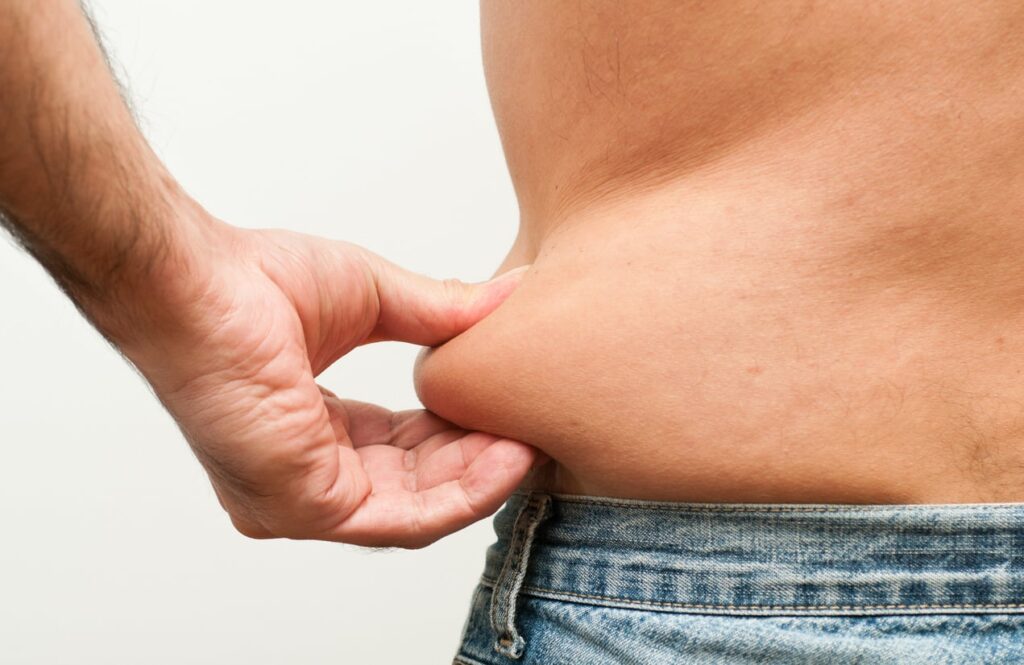

Love handles are a familiar frustration because they tend to ignore the usual rules. A patient can be disciplined with food, consistent in the gym, and lean almost everywhere else, yet still carry fullness at the flanks and lower waist. That is often the point when liposuction enters the conversation, not as a substitute for healthy habits, but as a contouring tool for a very specific problem.
In practice, waist contouring is rarely about dramatic weight loss. It is about proportion. A smoother transition from the ribcage to the hip can make clothing fit better, create cleaner lines under a dress shirt or fitted dress, and restore definition that exercise alone could not uncover. In a state like Michigan, where patients often spend half the year in layers and the other half trying to feel comfortable in lighter clothes, the desire for a more balanced waistline is common and understandable.
When people search for Liposuction Michigan, they are usually asking more than one question at once. They want to know whether they are a good candidate, what kind of result is realistic, how much downtime they should expect, and whether the change will look natural rather than overdone. Those are the right questions. Good waist contouring depends on restraint, judgment, and a clear understanding of anatomy, not just on how much fat is removed.
Why love handles are so stubborn
The flank area has a way of holding onto fat even when the rest of the body changes. Genetics plays a major role. Hormones, age, and past weight fluctuations matter too. Men often store fat in the love handle region even when their abdomen is otherwise fairly flat. Women may notice fullness that wraps from the sides of the waist toward the lower back, sometimes becoming more noticeable after pregnancy or with midlife body changes.
This area is also visually powerful. A relatively small amount of extra volume at the flanks can widen the silhouette and soften the waist. By contrast, removing a modest but well-planned amount of fat there can have a surprisingly strong effect on shape. That is why patients are often good candidates for targeted liposuction even when the number on the scale is stable and not especially high.
It helps to understand that surgeons are not chasing thinness here. They are refining the contour. The goal is to reduce outward projection at the sides, improve symmetry, and create a smoother curve from the upper torso into the hip region. On the right patient, that can make the entire midsection look more athletic and more proportionate without signaling that any procedure was done.
What liposuction can and cannot do at the waist
Liposuction can permanently remove a portion of the fat cells from the treated area. That is the part people tend to focus on, but the more practical question is how the skin and deeper tissues respond after that fat is removed. Good results require enough skin elasticity for the area to contract and redrape. If the skin is very loose, crepey, or hanging, liposuction alone may not produce the clean contour a patient imagines.
This is one of the most important judgment calls in body contouring. A patient may absolutely have excess flank fat, yet still be a poor candidate for liposuction alone because the skin envelope cannot tighten enough afterward. In those cases, treatment planning may shift. Sometimes the answer is to accept a more modest improvement. Sometimes it is to combine liposuction with another procedure. Sometimes the best advice is not to operate at all.
Liposuction also does not strengthen abdominal muscles, correct separated muscles, or treat significant central abdominal skin excess. Patients occasionally come in focused on the love handles when the bigger issue is laxity in the lower abdomen or changes after pregnancy. A careful consultation usually reveals where the contour problem truly starts and which treatment approach addresses it honestly.
The patients who tend to do best
The strongest candidates for waist contouring tend to have a stable weight, localized fat at the flanks, and reasonably good skin tone. They often say some version of the same thing: “I like my general size, but my waist never looks as defined as I want.” That is a much better starting point than someone looking for a major weight-loss procedure.
Age by itself is not the deciding factor. I have seen excellent outcomes in younger and older adults alike. Tissue quality matters more than birthday candles. A fit 52-year-old with good elasticity may heal better and achieve a more elegant contour than a 29-year-old with significant skin laxity after weight cycling.
The consultation usually turns on a few practical points:
- Whether the fullness is truly localized fat rather than loose skin or internal abdominal projection.
- Whether the skin has enough recoil to contract after fat removal.
- Whether the patient’s weight has been stable for several months.
- Whether expectations match what the anatomy will allow.
- Whether the patient is willing to follow recovery instructions closely.
Those details sound basic, but they prevent a great deal of disappointment. Liposuction is at its best when the problem and the procedure are well matched.
How waist contouring is planned
The public often imagines liposuction as simple subtraction. In reality, flank contouring is more like sculpture. Removing too little leaves the patient underwhelmed. Removing too much can create grooves, dips, or an unnaturally hollow look, especially where the waist transitions into the back and hips.
The most important planning happens before any treatment begins. A surgeon assesses the patient standing, not just lying on the exam table, because gravity tells the truth about body shape. The upper and lower flanks are evaluated separately. So is the posterior waist, the lower back, and in many cases the upper abdomen or lower abdomen. The waist does not exist in isolation. If only one adjacent area is treated, the untreated zone can stand out more afterward.
For that reason, many of the best waist contouring results come from treating a connected region rather than a single pocket. A patient may come in asking only for love handles, but a subtle blend into the lateral abdomen or lower back can make the final contour look more natural. This is especially true in men, where a squared torso can quickly look uneven if the flank reduction is not integrated with the rest of the midsection.
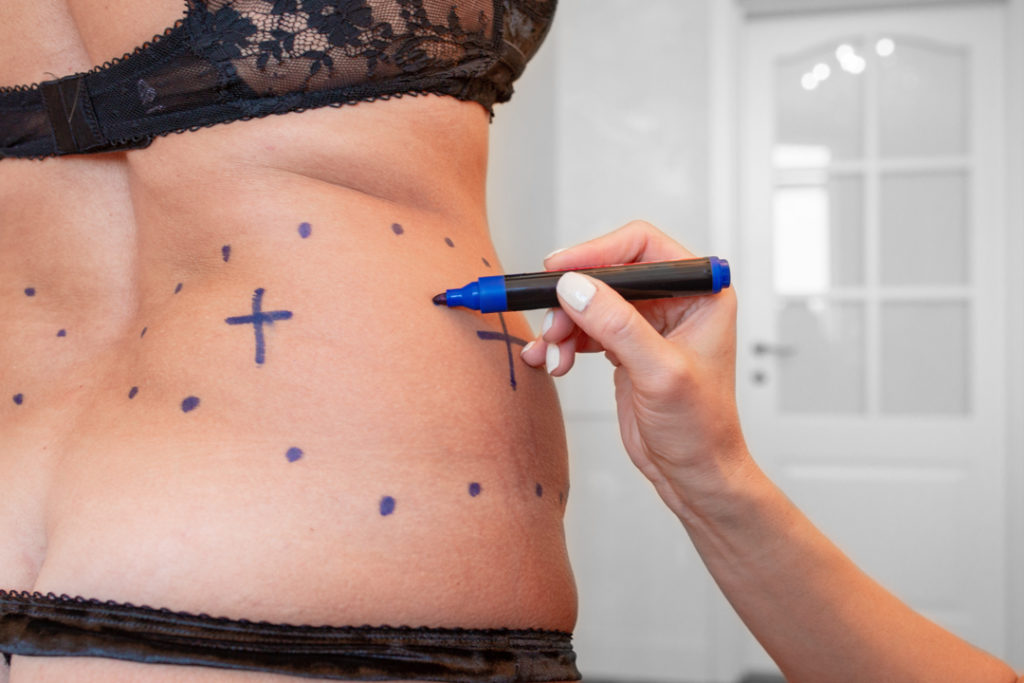
Marking the body before surgery is part technique and part strategy. Areas of maximal fullness are identified, but so are the boundaries where the contour must taper gently. That taper matters. Natural-looking results are built on transitions.
Techniques and what they mean for patients
Most modern liposuction for the waist uses tumescent technique, where a fluid containing anesthetic and medications is placed into the tissue before fat removal. This reduces bleeding, improves comfort, and helps with precision. Depending on the extent of treatment and the practice setting, the procedure may be done under local anesthesia, sedation, or general anesthesia.
Patients sometimes ask about branded technologies as if the device itself guarantees the result. Devices can be helpful, but the difference between an average outcome and an excellent one usually comes down to experience, judgment, and consistency of technique. Whether suction is assisted by power, ultrasound, or other energy, the fundamentals remain the same: respect the anatomy, preserve smoothness, and avoid over-resection.
There is also a persistent misconception that more aggressive fat removal is always better. It is not. The best surgeons are often conservative in exactly the right places. A tiny layer of residual fat can be what keeps the contour looking soft, even, and human. Patients almost never regret natural. They often regret extremes.
What the procedure day is typically like
For isolated flank liposuction, the treatment itself is usually straightforward. The area is marked while the patient is standing. Once in the procedure room or operating room, small access points are made in discreet locations. The tumescent solution is introduced, and then the fat is removed in a controlled pattern to reduce bulk and shape the waistline.
The procedure is not usually long when treating only the love handles, though timing varies with the patient’s build and whether adjacent areas are included. Most people go home the same day. They will be placed in a compression garment and given instructions about walking, hydration, medications, and activity limits.
Patients are often surprised that the first look in the mirror is not the final story. There is swelling, sometimes asymmetrically. The area can feel firm, numb, tender, or oddly tight. That is normal. Waist contouring improves in stages, and patience matters more than many expect.
Recovery in real life, not just on paper
The recovery experience is usually manageable, but it helps to speak plainly about it. Patients often describe soreness similar to an intense workout, mixed with bruising and stiffness. Getting in and out of bed, turning at the waist, and twisting to reach for something in the back seat can be annoying for several days. Most people can walk immediately, and they should, but they may not feel graceful for a week or two.
Compression garments are not glamorous, especially in warmer months, but they serve a purpose. They help control swelling and support the treated tissues as they settle. Some patients tolerate them easily. Others count the days until they can stop wearing them. Fit matters. A garment that rolls, pinches, or digs in can be miserable and may affect swelling patterns.
A realistic timeline sounds something like this:
- The first few days are focused on rest, walking, hydration, and managing soreness.
- Bruising and swelling are usually most obvious during the first two weeks.
- Many patients feel presentable in clothing within two to three weeks, though still swollen.
- Noticeable contour refinement often continues over two to three months.
- Final settling can take several months, especially in areas with thicker tissue.
This is where expectations matter. Patients who expect a polished, red-carpet result in ten days are often anxious unnecessarily. Patients who understand that the body needs time usually handle recovery much better.
The role of skin quality in the final result
If there is one variable people underestimate, it is skin. Fat removal changes volume, but the skin must adapt to that change. Younger skin often contracts more readily, though not always. Sun damage, smoking history, age, genetics, pregnancy, and weight fluctuations all influence how well the skin tightens.
This is particularly relevant around the lower waist and back, where skin can vary from firm and elastic to thin and lax. A patient with excellent skin may see the treated area sharpen beautifully. Another patient with looser tissue may still improve, but the outcome can be softer and less crisp. That does not mean the procedure failed. It means the tissue started from a different baseline.
A careful surgeon will discuss this before surgery instead of after. In my experience, patients appreciate honesty more than hype. Telling someone they can expect improvement, not perfection, is not pessimism. It is professionalism.
Men and women often want different things from waist contouring
Men frequently ask for a trimmer side profile and less spillover above the waistband. Many are less interested in an “hourglass” shape and more interested in looking leaner, stronger, and cleaner through the torso. Over-treatment can be especially problematic here, because an unnaturally scooped waist can feminize the silhouette in a way the patient did not want.
Women often seek more waist definition and a smoother line from the bra area through the flanks into the hips. For some, the waist contour is really about balance with the hips and buttocks. For others, it is about fitting into dresses or tailored pants without that persistent side fullness.
The point is not to reinforce stereotypes. It is to recognize that body contouring is personal, and the same amount of fat removal can look very different depending on the patient’s frame, muscle mass, pelvic shape, and aesthetic goals. The best planning starts with a mirror and a conversation, not a one-size-fits-all formula.
Common concerns patients bring up in Michigan consultations
Patients considering Liposuction Michigan often ask about seasonality, and it is a fair question. Michigan’s climate affects wardrobe, routines, and recovery comfort. Some people prefer surgery in cooler months because compression garments are easier to tolerate under fall or winter clothing. Others schedule around summer so they can enjoy warm-weather activities after healing. There is no universally right season, but there is a right season for your schedule and your tolerance for downtime.
Another recurring concern is work. Many office-based workers return relatively quickly if their procedure is limited to the waist and they can take it easy. Jobs that require heavy lifting, constant bending, or long physical shifts usually demand more planning. It is better to build in an extra few recovery days than to assume you will bounce back instantly Liposuction Michigan michellehardawaymd.com and then scramble.
Discretion matters too. Love handle liposuction is one of the easier body contouring procedures to keep private because the treated area is usually covered by regular clothing. Patients often tell only a spouse or a close friend. That is not a medical issue, but it is part of real life, and surgeons who listen well understand that recovery advice has to fit the patient’s social and work circumstances.
Risks, irregularities, and the value of restraint
Every surgery carries risk, even when it is common and elective. With liposuction, the concerns patients should understand include contour irregularities, asymmetry, persistent swelling, fluid collections, numbness, skin laxity, pigmentation changes from bruising, and the usual surgical risks such as bleeding or infection. Serious complications are uncommon in appropriate candidates, but they are not fictional, and they deserve straightforward discussion.
Contour irregularity is the result people fear most, and with good reason. A smooth waistline depends on even fat removal at the correct depth, with attention to transitions. Thin patients are sometimes at greater risk of visible irregularities because there is less margin for error. That is another reason aggressive liposuction is not always the best liposuction.
Revision surgery can improve some issues, but it is better to avoid the problem than to promise a fix later. Under-correction is often easier to address than over-correction. Experienced surgeons know this, even if patients occasionally push for “taking everything out.” Good contouring means knowing when to stop.
How to judge whether the result is good
A good result does not necessarily mean the smallest possible waist. It means the torso looks more balanced, clothing sits better, and the treated areas blend naturally with the surrounding body. The patient should not look carved in a way that calls attention to the procedure. They should simply look more proportionate.
Symmetry is important, though perfect symmetry is not a realistic standard because no human body begins symmetrical. The real benchmark is whether the remaining differences are minor and whether the overall contour looks intentional and smooth.
Long-term satisfaction tends to be highest when the patient wanted refinement rather than transformation. People who understand their anatomy and have a stable lifestyle usually feel the procedure gave them exactly what they had been missing. People who hoped liposuction would solve broad body image concerns often remain dissatisfied even when the technical result is sound.
Maintaining the contour after surgery
Once fat cells are removed, they do not grow back in the same number. That said, the remaining fat cells can still enlarge with weight gain. Most patients do not need to live with perfectionist discipline to preserve their result, but they do need a stable pattern. Major weight swings can blur the contour over time.
The practical advice is simple: keep your weight in a comfortable range, stay active, and avoid treating liposuction like permission to stop paying attention. Patients who already had good habits before surgery usually do best afterward because their lifestyle supports the new contour instead of fighting it.
There is also a psychological benefit that often shows up quietly. People who finally feel that their waist matches the effort they put into their health tend to maintain that effort more easily. They are not chasing a fantasy. They are protecting a result that feels earned and believable.
Choosing the right consultation mindset
If you are considering love handle reduction, go into the consultation ready to discuss specifics. Bring up what bothers you in fitted clothing, from the front view, from the side, and from the back. Mention any past weight changes, pregnancies, surgeries, or scars. Ask what can realistically be improved and what cannot. If the surgeon suggests treating adjacent areas for balance, ask why. A good answer should make visual sense when it is explained on your body.
It is also worth asking what the recovery usually feels like for patients with a similar build and treatment plan. Generic answers are less helpful than practical ones. The more tailored the guidance, the more confidence you can have that the surgeon has done this many times and understands the nuances.
The best Liposuction Michigan consultations do not feel like sales pitches. They feel like planning sessions. You should leave with a clearer understanding of your anatomy, your options, and your likely outcome. That kind of clarity matters more than marketing language, especially for a procedure where subtlety separates a nice improvement from an obvious mistake.
Waist contouring for love handles can be one of the most satisfying uses of liposuction because the target is so specific and the visual payoff can be strong. When the candidate is chosen carefully, the skin quality is respected, and the treatment is performed with restraint, the change can look remarkably natural. The waist appears cleaner, the silhouette more balanced, and the body more in line with the effort the patient was already making. For many people, that is exactly the point.
Aesthetic Plastic Surgery & Laser Center, Michelle Hardaway M.D.
27920 Orchard Lake Rd, Farmington Hills, MI 48334, United States
+1 248-221-1957
FAQ About Liposuction Michigan
Is 55 too old for liposuction?
Age 55 alone does not determine suitability. A surgeon evaluates overall health, skin quality, healing risks, and realistic goals. A personal consultation is needed to assess candidacy and discuss alternatives.
What happens 10 years after liposuction?
Contour improvements can last, especially with stable weight. Aging, pregnancy, and weight changes can alter the appearance over time. Results vary, and liposuction does not prevent future body changes.
Can lipo get rid of an apron belly?
Liposuction reduces localized fat but does not remove hanging excess skin. An apron belly may require assessment for a skin-removal procedure instead of, or alongside, fat removal. A qualified plastic surgeon can explain appropriate options and their risks.